


Woodford County High School For Girls
DRAMA

"Drama is the most powerful way of creating meaning through experience."
Dorothy Heathcote
Why study Drama?
Because Drama matters. Drama is a subject that challenges, inspires and empowers young people. Through performance, collaboration and creativity, students develop confidence, communication skills and emotional intelligence while exploring different perspectives and experiences. Drama encourages resilience, problem-solving and independent thinking, helping students become articulate and adaptable individuals. Whether pursuing a career in the creative industries or any other field, the skills gained through Drama are invaluable for future study, employment and life.
Drama at KS3
From September 2027, pupils in Years 7 to 9 will receive one Drama lesson each week. Our exciting Key Stage 3 curriculum takes students on a journey through the history, significance and power of theatre, combining practical performance with the study of influential theatrical styles and practitioners.
Students begin by exploring the origins of theatre and modern performance through units on Greek Theatre and Commedia dell'Arte before developing their understanding of key practitioners and performance styles via workshops inspired by Frantic Assembly, Steven Berkoff and Bertolt Brecht. Along the way, pupils learn how theatre reflects and responds to the world around us. Using Augusto Boal's Theatre of the Oppressed as a starting point, students investigate contemporary issues such as climate change, discovering how drama can be used to challenge ideas, raise awareness and inspire change. They further develop their creativity and communication skills through storytelling projects based on tales and fables from around the world.
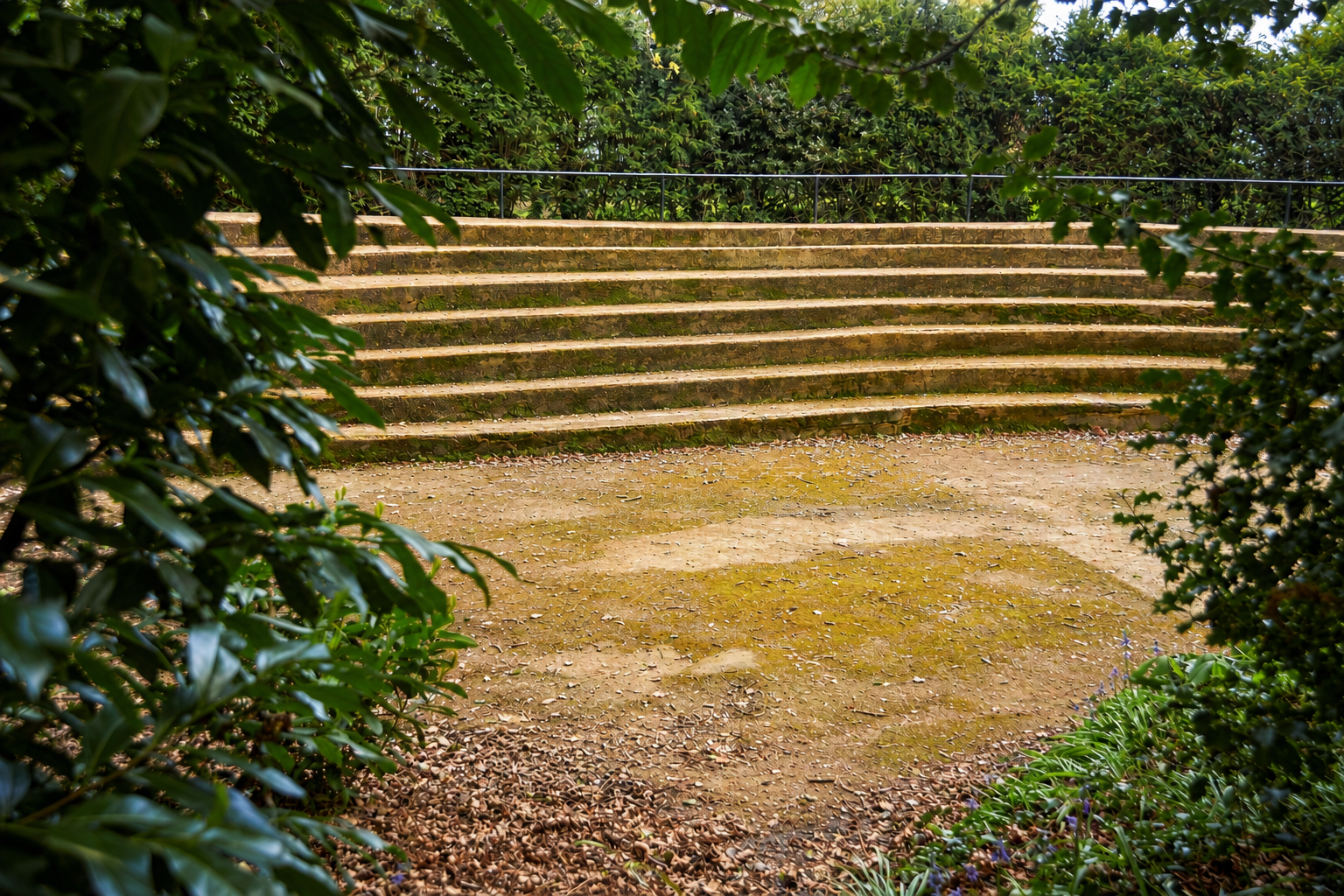 Throughout the curriculum, students build their skills as both performers and directors through practical work with play texts. In the summer term, they explore both modern drama and Shakespeare, culminating in performances that make use of the school's fabulous outdoor amphitheatre.
As well as providing a solid foundation for GCSE Drama, the Key Stage 3 curriculum encourages students to express themselves with confidence, find pleasure in stepping outside of their comfort zones, embrace new challenges and develop a wide range of transferable life skills, including collaboration, creativity, resilience and communication.
Drama at KS4
Students study the Eduqas GCSE Drama qualification, a dynamic and engaging course that combines practical performance with the analysis and evaluation of theatre. Through the creation, rehearsal and performance of original drama, alongside the study of professional theatre productions, students develop their understanding of how theatre is made, communicated and experienced by audiences.
GCSE Drama assesses students' ability to create, perform and analyse theatre. Students complete both devised and scripted performance work while developing their knowledge and understanding of how plays are realised on stage. The qualification is achieved through a combination of practical performance and/or design work, written coursework and a written examination, enabling students to demonstrate both their creative and analytical abilities.
One of the unique strengths of GCSE Drama is the opportunity for students to specialise according to their interests and talents. For their practical assessments, students may choose to be examined as either performers or theatre designers, with design pathways including costume, hair and make-up, set and props, lighting and sound. This flexibility allows students to develop specialist skills and explore potential career pathways whilst working to GCSE standard.
Throughout the course, students participate in a range of practitioner-led workshops and benefit from at least one theatre visit each academic year, enriching their understanding of both contemporary and historical theatre practice and inspiring their own creative work.
Alongside the development of theatrical knowledge and performance skills, GCSE Drama equips students with a wide range of transferable skills that are highly valued by employers, universities and further education providers. These include collaboration, independent learning, creativity, research, analysis and evaluation, communication, leadership, resilience, problem-solving and the confidence to present ideas effectively to a range of audiences. As a result, students leave the course not only as stronger performers and theatre-makers, but also as confident, articulate and adaptable young people.
Drama at KS5
Students study the AQA A-Level Drama and Theatre qualification, an academically rigorous and creatively rewarding course that encourages them to become thoughtful theatre-makers, perceptive critics and confident performers. Through the practical exploration of a diverse range of plays, practitioners and performance styles, students develop a sophisticated understanding of how theatre reflects, challenges and shapes society.
At the heart of the course is the study of compelling and thought-provoking play texts, many of which feature complex and powerful female protagonists. As a girls' school, we place particular value on exploring plays that centre women's voices, experiences and perspectives, enabling students to engage with characters who challenge conventions, demonstrate resilience and drive dramatic action. Through both practical workshops and textual analysis, students examine how playwrights and theatre-makers represent gender, identity, power and social change.
Students create and perform their own original devised work, inspired by the techniques and methodologies of influential theatre practitioners. Alongside this, they study and perform extracts from published plays, developing advanced skills in acting and interpretation.
The course also requires students to analyse and evaluate live theatre, deepening their understanding of artistic intention, performance choices and theatrical conventions. Through regular theatre visits, practitioner workshops and discussions, students learn to articulate and defend their ideas with confidence and insight.
Alongside the development of advanced theatrical knowledge and performance skills, A-Level Drama and Theatre equips students with a wide range of transferable skills that are highly valued by universities and employers. These include independent research, critical analysis, collaboration, leadership, creativity, problem-solving, communication and the ability to present complex ideas with confidence and clarity.
Whether students pursue Drama at university, enter the creative industries, or follow entirely different career pathways, the course develops intellectually curious, resilient and articulate young people who are able to think critically, work collaboratively and communicate effectively in a rapidly changing world.
